
September Blog
A family holiday to the Lakes!

For years, holidays or family occasions felt like a huge roadblock in my weight loss journey. A week away meant meals out, drinks, treats… and then the familiar “I’ll just take a week off the diet.”
That week off would always turn into overeating.
“I’m on holiday, why not eat anything and everything I want?”
And every time, it left me feeling stuffed, uncomfortable, and disappointed.
The pattern was always the same. I’d wake up the next morning still full from the night before, but because the hotel included breakfast and I’d declared it my “week off,” I’d force down a full English anyway. Then lunch, a big meal and a dessert, even though I wasn’t actually hungry. Then another heavy evening meal.
The cycle would continue for the whole week. By the time I got home, I would have gained between 4 to 6lbs and felt the shame, the frustration, and the familiar “Oh well, I’ll start again on Monday,” usually said while halfway through a packet of biscuits.
This cycle needed to end and thankfully now it has.
Family time is precious. I didn’t want to spend it dreading the idea that all the weight I’d worked so hard to lose would pile back on in just seven days.
The Food R.E.S.E.T changed everything for me. It gave me the ability to stop dieting and start changing. To enjoy food without guilt. To stop restricting myself. To stop losing control just because I was on holiday. It taught me to listen to my body.
Sometimes that means having a main course and a bottle of wine but stopping when I’m full. Sometimes it means choosing the lighter option of scrambled eggs and salmon the next morning because that’s what my body actually needs. Fuel, not punishment. Nourishment, not force‑feeding myself until I feel awful for the rest of the day.
It sounds simple, but for an emotional eater who has lived in restriction mode for years, it doesn’t feel simple at all.
Trust me, I know. I was an emotional eater. You’re not alone. So many of us struggle with this.
You can take back control and we can help. xx
Why midlife can leave you feeling unlike yourself
Sometimes the hardest part isn’t one particular symptom. It’s the feeling that somehow, you’re just not quite you anymore.
Perhaps you’ve noticed it gradually.
You’re more tired than you used to be.
Your sleep isn’t what it was.
Things that once rolled off your back suddenly feel overwhelming.
You might walk into a room and forget why you’re there. Lose a word halfway through a sentence. Or feel irritated by something that wouldn’t previously have bothered you.
Your confidence may have shifted too.
And somewhere amongst all of that, you might find yourself thinking:
"What is happening to me?"

Midlife can be about much more than hot flushes
For years, the conversation around menopause seemed to focus on a fairly small collection of physical symptoms - particularly hot flushes and periods stopping.
We now talk much more openly about the wider experience.
Changes in sleep, energy, concentration, mood and emotional wellbeing can all affect how we feel and function.
And they don’t happen in isolation.
Midlife itself can already be a busy and demanding stage of life.
Work may be changing.
Relationships evolve.
Children grow up or need us in different ways.
Parents get older.
Our bodies change.
Sometimes we’re caring for everybody else while quietly wondering where we disappeared to.

“I just don’t feel like myself”
That’s something many women describe.
It doesn’t necessarily mean that everything is wrong.
Sometimes lots of relatively small changes accumulate until we realise we’re approaching everyday life differently.
Perhaps you’ve become less confident.
Maybe you’re avoiding situations you once enjoyed.
You might feel more anxious, less patient or simply exhausted by things that previously felt manageable.
Recognising those changes matters.
Not because we need to “fix” ourselves, but because understanding what’s happening can help us decide what we need.
You haven’t disappeared.
You may simply need some space to reconnect with yourself.

You don’t have to simply put up with it
There is much more information and support around menopause and perimenopause than there used to be.
For some women, speaking to a healthcare professional about symptoms and treatment options will be important.
But medical treatment isn’t the whole picture.
Understanding your own experience, looking at sleep and energy, finding ways to calm an overloaded nervous system, talking openly and making space for your own wellbeing can all form part of navigating this stage of life.
And sometimes simply discovering that other women are experiencing many of the same things can be reassuring.

What if this stage isn’t just about getting through it?
Midlife brings change.
Some of it we choose.
Some of it we certainly don’t.
But perhaps there’s also an opportunity to stop and ask:
What do I need now?
Not what worked ten years ago.
Not what everybody else needs from you.
What do you need at this stage of your life?
That might mean:
Better boundaries
More rest
Understanding your changing body
Rebuilding confidence
Making time for what matters
Permission to acknowledge how you feel

Midlife is not the end of you
Debby's personal Menopause experience.
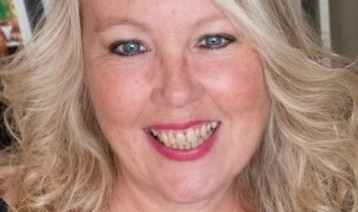
For a while, I thought midlife was all about what I was losing. Looking back, I realise it was also the beginning of finding my way back to myself.
For me, midlife didn't arrive as one dramatic moment.
There wasn't a particular day when everything suddenly changed.
It was more gradual than that.
I began to notice things about myself that felt different.
Energy.
Confidence.
The version of myself I recognised most easily.
For a while, I concentrated on carrying on.
Getting things done.
Being there for other people.
Doing all the things that everyday life requires of us.
But somewhere along the way, I realised I was spending far too much time coping rather than living.
I could be smiling on the outside while feeling stretched thin on the inside.
And without really noticing it happening, I'd drifted further away from myself than I realised.

When did I stop feeling like me?
That's a surprisingly difficult question to answer.
There wasn't one event I could point to.
Life had simply been busy.
I'd spent years in a busy career, juggling work, home and all the usual responsibilities that come with family life. I was very good at getting things done and being there when other people needed me. Somewhere in amongst all of that, I'd stopped paying quite so much attention to what I needed and it's very easy for our own needs to gradually move further and further down the list.
Eventually I realised I wasn't feeling like the person I remembered being.
Not because that person had disappeared.
I'd simply stopped paying very much attention to her.
I hadn't lost myself.
I'd just stopped making much space for myself.

I started asking different questions
Things began to shift when I stopped concentrating solely on getting through each day and started asking myself some fairly simple questions.
Who am I now?
What do I need now?
What am I no longer willing to tolerate?
Those questions sound straightforward.
The answers weren't always quite so easy.
But they made me stop and think about where I was, rather than constantly concentrating on what needed doing next.
And perhaps most importantly, they made me realise that what I needed now didn't necessarily have to be the same as what I'd needed ten or twenty years ago.
Finding my way back
There wasn't an overnight transformation.
I didn't wake up one morning suddenly feeling completely different.
It happened gradually. Small decisions. Different priorities. Becoming more aware of what gave me energy - and what drained it.
For me, finding my way back wasn't one big decision. It was lots of smaller things - becoming more interested in my own wellbeing, learning to slow down, exploring things like mindfulness and Reiki.
And slowly, I began to reconnect with myself. Not necessarily with the person I had been before. With the person I was becoming.

Midlife wasn't the end of me
For a while, I think I'd unconsciously viewed midlife as a period of loss.
Things changing. Getting older. Parts of life being behind me rather than ahead of me.
I don't see it quite like that anymore.
Of course there are changes in midlife that we wouldn't necessarily choose. But I've also discovered that change can make us stop and take stock. It can make us ask questions we might otherwise never have asked.
What matters to me now?
What do I want more of?
What do I want less of?
What am I ready to change?
Midlife wasn't the end of me.
It was an invitation to reconnect with myself.


When it comes to food and habits, knowing what to do isn’t usually the problem.
How many times have you told yourself:
“I know what I need to do - I just need to do it.”
Maybe you’ve started the week determined to eat differently. You’ve made a plan, bought the right foods and promised yourself that this time you’ll stick to it.
And then life happens. You’re tired. Work has been stressful. You’ve had a difficult day. Someone has annoyed you.
Or perhaps nothing particular has happened at all - you simply find yourself reaching for the same foods or slipping back into familiar habits.
It’s very easy at that point to blame yourself.
I have no willpower.
But what if willpower isn’t actually the problem?

The patterns we don’t always notice
Often there’s something happening underneath the behaviour.
Something happens → we feel something → we reach for food.
In that moment, food might provide comfort, distraction, pleasure or relief.
That doesn’t make us weak or mean that we lack willpower.
But when we don’t recognise the pattern, it can be difficult to change it.

A different way forward
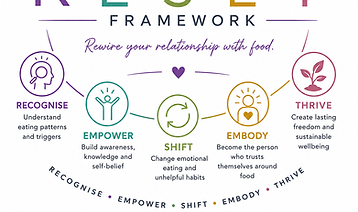
Food R.E.S.E.T. isn’t about handing you another list of foods you should and shouldn’t eat.
Most of us have already absorbed a lifetime of those messages.
It’s about creating space to recognise your own patterns, understand what’s driving them and begin making changes that feel realistic for you.
Because sometimes you don’t need more rules.
You need a better understanding of what’s actually going on.
It’s rarely about willpower
Our relationship with food is influenced by far more than hunger.
Food can be comfort. A reward. Something to do. Part of connecting with other people. Or simply a familiar part of our routine.
Over time, some behaviours become so familiar that we barely notice them happening.
That evening snack while watching television.
Reaching for something sweet after a difficult day.
Finishing what’s on the plate even though you’re already full.
Or deciding you’ve “ruined it” because you ate something you hadn’t planned to eat.
These aren’t signs that you’ve failed.
They’re patterns and patterns can be explored and changed.

Start with curiosity, not criticism
Start with curiosity, not criticism
At Lancashire Wellbeing, we believe meaningful change starts with recognising what’s happening rather than judging yourself for it.
Instead of asking:
“Why can’t I just control myself?”
you might begin to ask:
“What’s happening when I make this choice?”
“What am I feeling?”
“Is this something I do automatically?”
“What does this food or behaviour give me in that moment?”
Those are very different questions.
And they can lead to very different answers.
What if you noticed rather than judged?
Changing your relationship with food doesn’t necessarily begin with changing what’s on your plate.
Sometimes it simply begins with noticing.
Curiosity can be a powerful place to start.
You don’t need more willpower.
You need a new way forward.
Food R.E.S.E.T. is our five-week online programme designed to help you explore your relationship with food and begin making changes that work for you.


Team
Blog

Debby speaking about the Midlife R.E.S.E.T Programme
"Why this became part of Lancashire Wellbeing"
My own experience is one of the reasons Midlife R.E.S.E.T. matters so much to me.
Because I've discovered I'm far from alone. So many women reach this stage of life and say:
“I just don't feel like myself anymore.”
Lancashire Wellbeing came out of a period of change in my own life too. After more than 20 years working in the NHS, I found myself thinking much more about wellbeing — not simply as something we talk about, but about what actually helps people make changes in real life.
I'm not a therapist or menopause specialist. My role in Lancashire Wellbeing comes from a different place - years of working around health services, governance and improvement, alongside my own experience of reaching midlife and realising that wellbeing can easily become something we prioritise for everyone except ourselves.
And that's part of why we wanted Midlife R.E.S.E.T. to be about more than a list of menopause symptoms.
Understanding what's happening physically matters.
But so do sleep and energy.
Stress and emotions.
Confidence.
Identity.
And having the space to think about you again.
We wanted to create a supportive space where women could understand some of what's happening, share experiences and begin finding their own way forward.
Not somebody else's version of what midlife should look like.
Their own.